
How to Choose the Right Off Grid Solar Power System for Your Project
In real-world projects such as farms, construction sites, telecom stations, and remote installations, I often see the same issue: the system itself is not the problem, but the performance is unstable.
After analyzing many cases at DAMAVO®, the root cause is usually not the product quality, but a mismatch in the system selection logic at the beginning.
Choosing an off grid solar power system is not simply about “more power is better.” It is a structured decision based on load demand, environment, energy storage, and future scalability.
If you are planning a project that requires independent power supply, this guide will help you build a more reliable selection framework.
Key Selection Principles
- Always start from real daily energy consumption, not nameplate power
- Peak load determines inverter stability under startup conditions
- Installation environment directly affects system efficiency and lifespan
- Battery capacity defines continuous power supply capability
- Future expansion planning reduces long-term upgrade costs

What Is an Off Grid Solar Power System?
An off grid solar power system is a standalone energy solution that operates independently from the utility grid.
Its working principle is straightforward:
Solar generation → Energy storage → On-demand power output.
A complete system typically includes:
- Solar panels (energy generation)
- Battery storage system (energy storage)
- Inverter (power conversion)
- Charge controller (system protection and management)
- Monitoring system (performance tracking and optimization)
At DAMAVO®, these systems are widely used in agricultural equipment, construction machinery, mobile power units, and remote infrastructure projects. A complete solution also relies on reliable Power Supply Parts, including inverters, battery management modules, charging interfaces, and electrical control components that ensure stable system performance.

Why System Selection Directly Impacts Project Success
In practice, I often see two common mistakes:
One is undersizing the system, which leads to unstable operation or frequent shutdowns. The other is oversizing, which increases upfront investment and reduces ROI efficiency.
The core issue is simple: many decisions are made based only on “installed capacity,” without understanding real operational behavior.
A better approach is:
Do not choose the biggest system — choose the most correctly matched system.
This principle determines long-term reliability and cost efficiency.

Step 1: Understand Your Real Energy Demand
If there is one step that defines the entire design, it is this one.
From experience, I suggest breaking it into three parts:
Daily Energy Consumption
List all devices and calculate:
- Power × operating hours = daily energy use
For example:
- LED lighting: 100W × 8 hours
- Water pump: 500W × 4 hours
- Monitoring system: 50W × 24 hours
Then sum everything to get total daily consumption (Wh or kWh).
Peak Load Need
Some equipment has high startup surges, such as:
- Water pumps
- Air conditioners
- Motor-driven equipment
Thus, inverter selection must consider peak surge power, not just average load.
Backup Duration
Ask yourself a key question:
How long should the system keep running without enough sunlight?
- 1 day autonomy
- 2 days autonomy
- 3+ days autonomy
Longer backup time requires larger battery capacity.
Step 2: Test Installation Conditions
Environmental conditions often determine real system performance more than specifications.
At DAMAVO®, we typically test three factors:
Solar Resource Availability
Higher solar irradiation reduces required panel capacity and improves system efficiency.
Installation Space
The available area (roof, ground, or equipment platform) directly impacts system layout and expansion potential.
Environmental Conditions
Key factors include:
- High or low temperature
- High humidity or corrosive environments
- Dust, vibration, or harsh outdoor conditions
These conditions influence equipment lifespan and must be considered during design.
Step 3: Match System Size to Application Scenario
Different projects must different power levels, so system sizing must follow application logic.
3.6kW Off Grid Solar Power System
Suitable for light-load and basic applications such as:
- Small farms
- Monitoring stations
- Remote workstations
- Mobile equipment support
This option is cost-efficient and easy to deploy.
Every application has different power requirements. For example, a remote monitoring station may only need communication equipment and LED lights, while a construction site may also require pumps, power tools, and temporary office equipment. Understanding your actual loads is the first step toward selecting the right system.
6.2kW Off Grid Solar Power System
Suitable for medium-load and multi-device environments such as:
- Construction sites
- Medium-scale agricultural projects
- Telecom base stations
- Commercial or industrial auxiliary power systems
It offers higher stability and better scalability.
If you prefer a compact solution that integrates the inverter, MPPT controller, and battery storage into one unit, an All-in-One Off Grid Solar Power System can simplify installation and reduce deployment time.
Step 4: Battery Storage Defines System Stability
In off grid systems, the battery is more critical than solar panels when it comes to reliability.
Common options include:
- Lithium batteries (higher efficiency and longer lifespan)
- Lead-acid batteries (lower initial cost)
For long-term commercial or industrial applications, lithium batteries are often preferred due to:
- Higher cycle life
- Better discharge performance
- Lower maintenance requirements
Key battery parameters include:
- Capacity (kWh)
- Cycle life
- Charge/discharge efficiency
- Operating temperature range

Step 5: Plan for Future Expansion
In real projects, energy demand rarely stays fixed.
A well-designed system should consider:
- Whether solar capacity can be expanded
- Whether battery storage can be increased
- Whether inverters can be connected in parallel
- Whether remote monitoring and upgrades are supported
At DAMAVO®, we usually recommend reserving 20%–30% expansion capacity to reduce future upgrade costs.
Selection Is About Matching, Not Oversizing
If I had to summarize the entire logic in one sentence:
The best off grid solar power system is not the largest one, but the one that best matches your real operating conditions.
From DAMAVO®’s project experience, a successful system always includes:
- Accurate load analysis
- Clear scenario understanding
- Planned scalability
Before choosing equipment, the most important step is not “what to buy,” but “how your system will actually operate.” Once this is clear, the design naturally becomes stable, efficient, and future-proof.
Looking forward to cooperating with you! To see FAQ know more Off Grid Solar Power System! send E-mail:joy@damavo.com ;nine@damavo.com to us!
OEM Off Grid Solar Power System Solutions: Reliable Energy for RV, Marine, and Industrial Applications
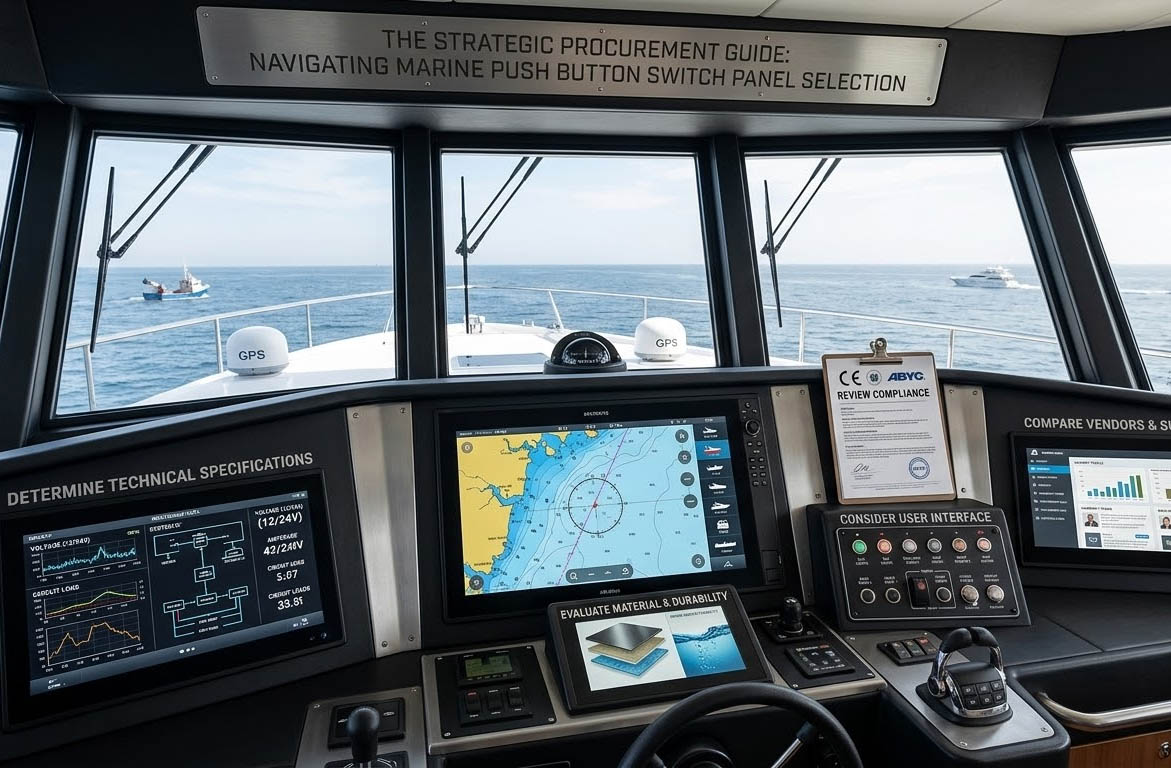
The Strategic Procurement Guide: Navigating Marine Push Button Switch Panel Selection
Related Article

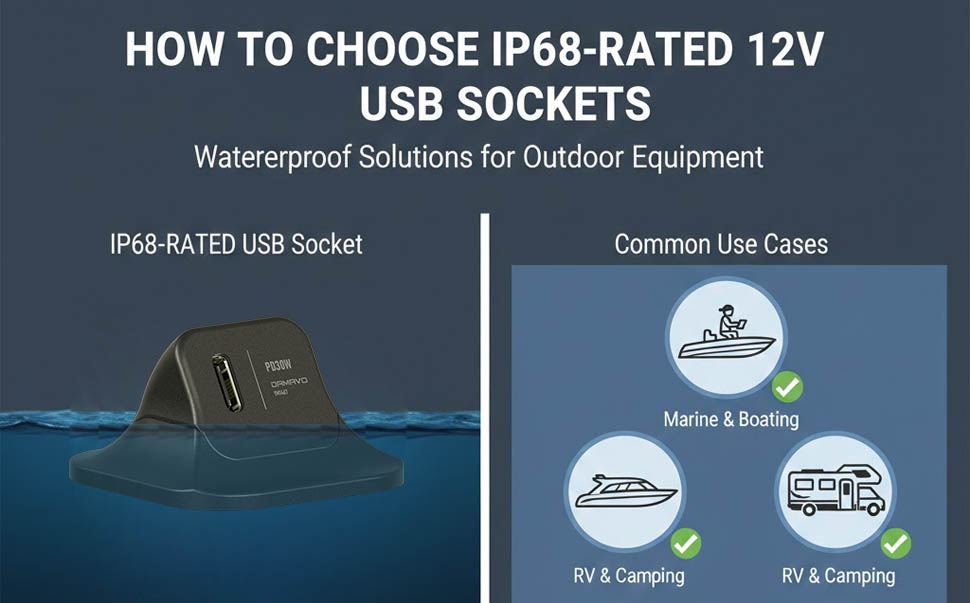
For B2B buyers and electrical engineers, choosing a reliable 12v usb socket waterproof solution is not just about meeting specs — it is about reducing long-term service and repair costs.