AEC-Q100 Explained: What Vehicle USB Charger Buyers Should Ask
Ask a supplier whether their 12V USB charger is AEC-Q100 qualified, and you will usually get a yes. Ask what that qualification actually covers, and the conversation goes quiet.
The standard is real and the tests behind it are severe. But it applies to packaged integrated circuits, not to the socket in your dashboard. AEC's own document states there are no certifications for AEC-Q100 and no board that issues them. So the claim on the box and the claim your quality team needs are two different claims.
This article separates them.
The short version
- AEC-Q100 is a stress-test qualification for packaged automotive ICs. Current revision: Rev J, August 2023.
- It contains seven test groups and four temperature grades, Grade 0 through Grade 3.
- It does not qualify a complete USB charger, and AEC issues no certificates for anything.
- A finished charger still needs electrical, thermal, EMC, ESD and protection validation at module level.
- What to ask a supplier for: IC datasheets with ESD levels, qualification data, PCBA test reports, module validation records.
1. What AEC-Q100 Actually Is
AEC-Q100 is one document in a family, published by the Component Technical Committee of the Automotive Electronics Council. Its full title is Failure Mechanism Based Stress Test Qualification for Integrated Circuits in Automotive Applications, which is longer than most people expect and more specific than most quotations of it.
The revision matters when you compare sources. Rev J is dated 11 August 2023. Rev H, from 2014, is still what plenty of blog posts were written against, so test details and pass criteria do not always line up between two articles that both look authoritative.
1.1 Three definitions worth reading before any supplier meeting
The document defines three terms that sales conversations tend to blur:
- §1.3.1 AEC Q100 Qualification describes what a supplier must have completed before it can claim a part is AEC-Q100 qualified.
- §1.3.2 AEC Certification says outright that no certifications exist and no certification board issues them. Each supplier qualifies its own parts and submits the data to the customer for verification.
- §1.3.3 Approval for Use in an Application is the customer's own decision, taken against its mission profile and installation conditions.
Ten minutes on those three paragraphs will settle most of the ambiguity in an AEC-Q100 discussion. A qualified part is not a certified part, and neither of them is an approved part.
1.2 What it actually tests
Table 2 of Rev J sorts the qualification into seven test groups. Not every test applies to every device, and §4.1 says so explicitly; the flow in Figure 3 decides which groups are triggered for a given part.
| Group | What it covers | Typical items |
| A | Accelerated environment stress | Preconditioning, unbiased/biased humidity (THB, HAST, UHST), temperature cycling, high-temperature storage |
| B | Accelerated lifetime simulation | HTOL, ELFR, endurance and data retention (EDR) |
| C | Package assembly integrity | Wire bond shear (WBS), wire bond pull (WBP), bump shear (BST), solder ball shear (SBS) |
| D | Wafer fabrication reliability | Electromigration (EM), TDDB, hot carrier injection (HCI), bias temperature instability (BTI), stress migration (SM) |
| E | Electrical verification | Functional and parametric tests, fault grading, characterization, ESD (HBM, CDM), latch-up (LU) |
| F | Defect screening | Screening such as burn-in, where the device type requires it |
| G | Cavity package integrity | Gross and fine leak, lid tests, die shear (DS) |
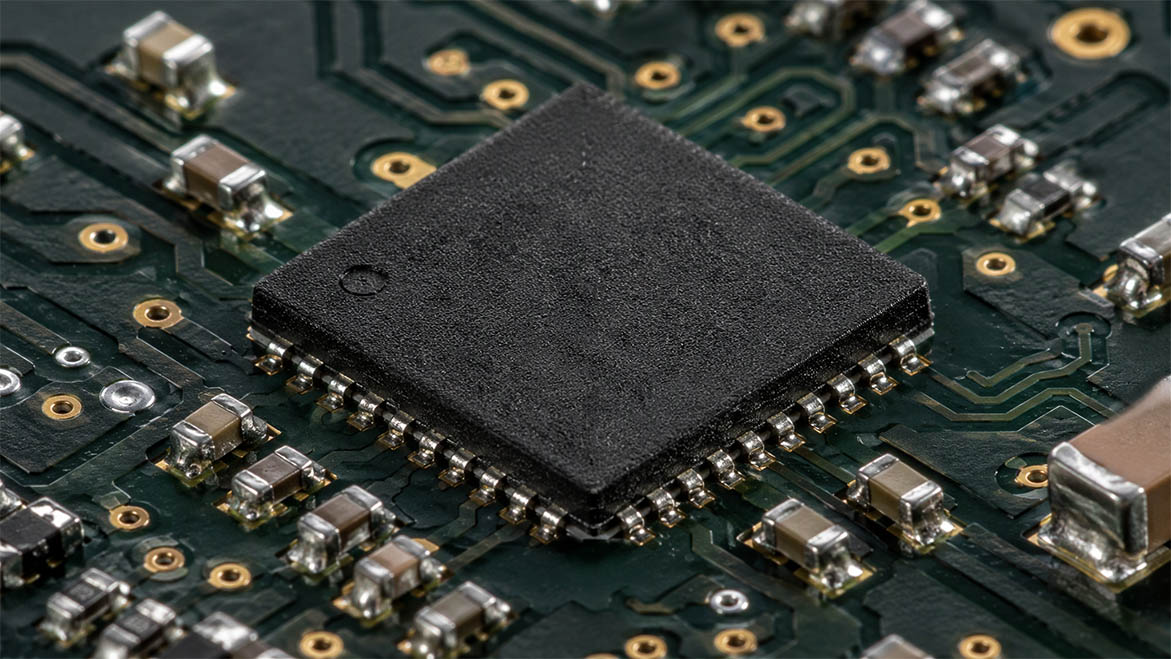
What this means for a charger: the controller inside your 65W PD port was stressed at die level, package level and electrically. The 100mm of wiring, the housing, the connector and the solder joints around it were not part of that qualification. They never are.
1.3 Temperature grades, and the one mistake people make
Table 1 defines four ambient grades.
| Grade | Ambient operating temperature range |
|---|---|
| 0 | -40°C to +150°C |
| 1 | -40°C to +125°C |
| 2 | -40°C to +105°C |
| 3 | -40°C to +85°C |
Grade 4 does not appear in Rev J. If a datasheet cites one, ask which revision the part was qualified against.
The number is ambient temperature at the part, not at the PCB, and not the air temperature on your dashboard in July. During powered stress the standard accounts for junction heating separately, which is why the grade should not be read as a junction limit either.
Grade is also not a quality ranking. A Grade 0 part is not "better" than a Grade 1 part for a cabin-mounted charger; it is qualified to a wider ambient window that the application will never use. Specifying higher than the installation requires is a way to pay for margin nobody measures.
2. Does AEC-Q100 Apply to a Complete USB Charger?
No. AEC-Q100 applies to packaged integrated circuits: MCUs, PMICs, power control ICs, USB charging controllers. A finished charger contains those plus MOSFETs, passives, a PCB, solder joints, a connector, a housing and protection circuitry. The qualification stops at the package boundary.
2.1 Three levels, three kinds of evidence
Anyone buying an automotive charger ends up evaluating three layers, and each layer produces different paperwork.
| Level | Key considerations | What you should be able to obtain |
|---|---|---|
| Component | IC model, AEC-Q100 grade, operating temperature | Datasheet with HBM/CDM levels, qualification summary, PPAP where required |
| PCBA | Circuit design, component matching, layout, solder quality | PCBA test report, functional test records, AOI or X-ray results |
| Product | Protection, thermal performance, EMC, mechanics, environment | Module-level test reports, aging records, certification certificates |
A supplier who can only answer the first row has answered a third of the question. That gap is where most of the risk in a cheap quotation lives, and it is what our own custom PCBA assembly work is set up to document.
2.2 Why "AEC-Q100 certified charger" is the wrong wording
Two reasons, both from the standard itself.
First, §1.3.2 states there are no certifications and no certification board. A supplier cannot be certified to AEC-Q100 by anyone, including AEC.
Second, assembling qualified parts does not qualify the assembly. You can populate a board entirely with Grade 1 components and still have a product that fails thermal cycling because of a solder joint or a housing that traps heat.
Wording that survives a technical review: built with AEC-Q100 Grade 2 qualified ICs, validated at module level to ISO 16750. Wording that invites a difficult email: AEC-Q100 certified. We would rather be held to the first one.
3. What Else Has to Be Validated
Four areas cover most of what a customer's quality team will ask about, and each maps to a standard they will name.
3.1 Electrical: load dump and transients
12V and 24V systems are not clean supplies. Load dump, cranking dips and inductive switching all appear on the input of a charger that is doing nothing wrong.
Keep two standards apart in the test plan. ISO 16750-2 covers the supply voltage curves, including load dump and superimposed AC. ISO 7637-2 covers conducted transients on supply lines, the familiar pulses 1, 2a, 3a and 3b. They answer different questions, and a report that cites one while claiming the other is a report worth reading twice.
3.2 Thermal and climatic
ISO 16750-4 covers climatic stress: low- and high-temperature operation, temperature cycling, humidity, thermal shock.
For a socket rated at 45W or 65W, the number that predicts field survival is temperature rise at full load in the actual mounting position, not the ambient rating on the datasheet. A charger mounted behind a closed panel runs hotter than the same unit on a bench, and no qualification grade compensates for that.
3.3 EMC: emissions, immunity, and the certificate that actually gates the project
CISPR 25 (2021 edition) covers emissions. ISO 11452 covers immunity. UN ECE R10 is the one that decides whether the component can go into a vehicle at all in most export markets, because it is a type-approval need rather than a bench measurement.
This is where a charger stops being a component and becomes part of a vehicle approval file. CE, E-mark and R10 documentation belong in the project folder from the prototype stage; discovering the gap at PPAP costs a quarter.
3.4 ESD, because fingers touch the port
ISO 10605 is the automotive ESD standard, and a USB port is one of the few places on a dashboard where a user discharges into exposed contacts.
Two numbers matter, and they sit at different levels. At module level, contact discharge at the port, typically to 8 kV under IEC 61000-4-2 level 4. At IC level, AEC-Q100 §1.3.1 recommends the datasheet state the passing HBM voltage and CDM test condition, with a footnote on any pin exceptions, especially where levels fall below 2 kV HBM or the 750/500 V CDM conditions; JEP178 gives the reporting guidance. Ask for both. One does not imply the other.
3.5 Protection functions
Short circuit, overcurrent, overtemperature, overvoltage and undervoltage, reverse polarity. These are not paperwork items. On a 24V truck system, reverse polarity happens when someone jump-starts the wrong way at the end of a shift, and a charger without it comes back as a warranty claim instead of a repair.
A practical four-protection set (short circuit, polarity, overload, thermal) covers most field failures we see. Our 12V PD charger socket with four built-in protections is built around that set, with 100% aging before shipment.
4. How OEM Buyers Should Test a Supplier
Price comparison is the easy half of sourcing. The harder half is working out whether the supplier can produce evidence for claims it has already made.
4.1 Documents to request
Ask for these before the sample stage, not after:
- IC models and datasheets for the critical parts, with HBM and CDM levels stated.
- Qualification data for those ICs, and PPAP if your process requires it.
- PCBA-level test reports: functional, and where relevant AOI or X-ray.
- Module-level reports for electrical, thermal and EMC testing, with the standard and revision cited.
- Protection function verification, including reverse polarity.
- Certificates for the markets you sell into, and the test lab that produced them.
A supplier who answers three of six is not necessarily a bad supplier. A supplier who answers six without producing files is a different problem.
4.2 Factory signals that predict consistency
The documents tell you what was tested once. The factory tells you what ships in year three.
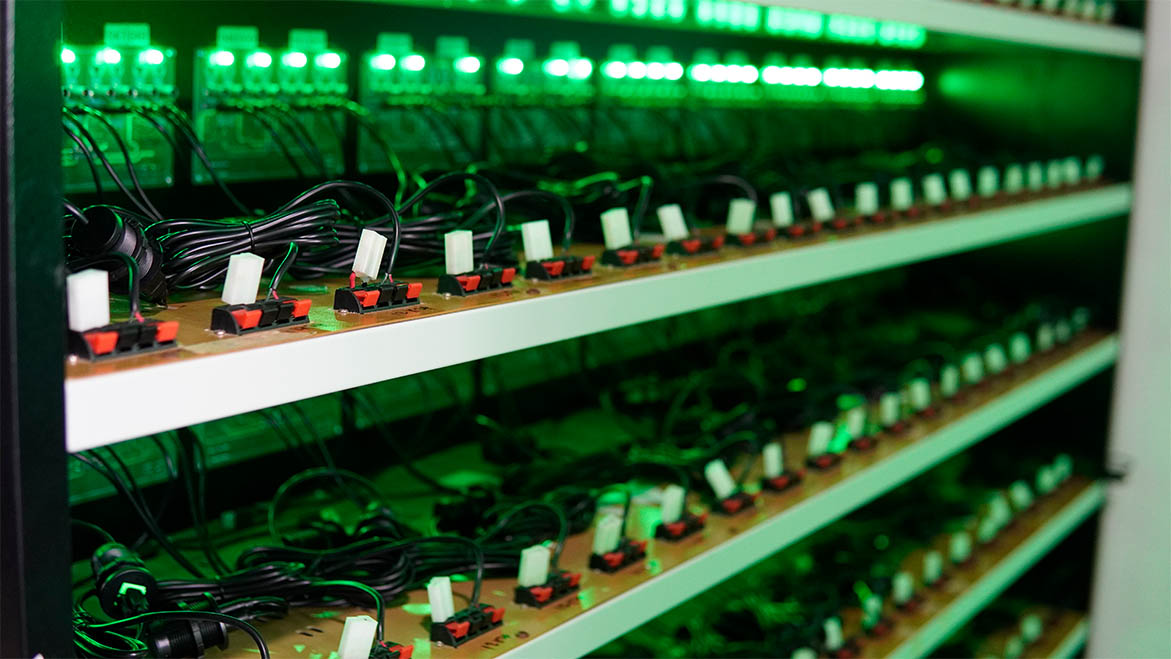
Two signals carry most of the weight. Full inspection rather than sampling: our lines run 100% semi-finished inspection and 100% aging before packing, which is where infant mortality gets screened out. And in-house test capability, because a supplier that outsources every measurement learns about a problem at the same time you do.
Quality management certification is a separate subject from component qualification. IATF 16949 and ISO 9001 describe how a factory is run; AEC-Q100 describes how a part was stressed. Both matter, and neither substitutes for the other.
One practical consequence for buyers: automotive-grade silicon is not a default on every charger platform, it is a line item you specify. The same housing often ships in two versions, one with commercial-grade ICs for price-driven accessories and one with AEC-Q100 qualified ICs for OEM projects, and they look identical from the outside. Ask which version is being quoted. Our platform supports both, and AEC-Q100 qualified ICs are adopted where the project calls for them.
5. Matching the Charger to the Vehicle
Once the qualification question is settled honestly, the specification questions are ordinary engineering.
5.1 Input voltage and output power
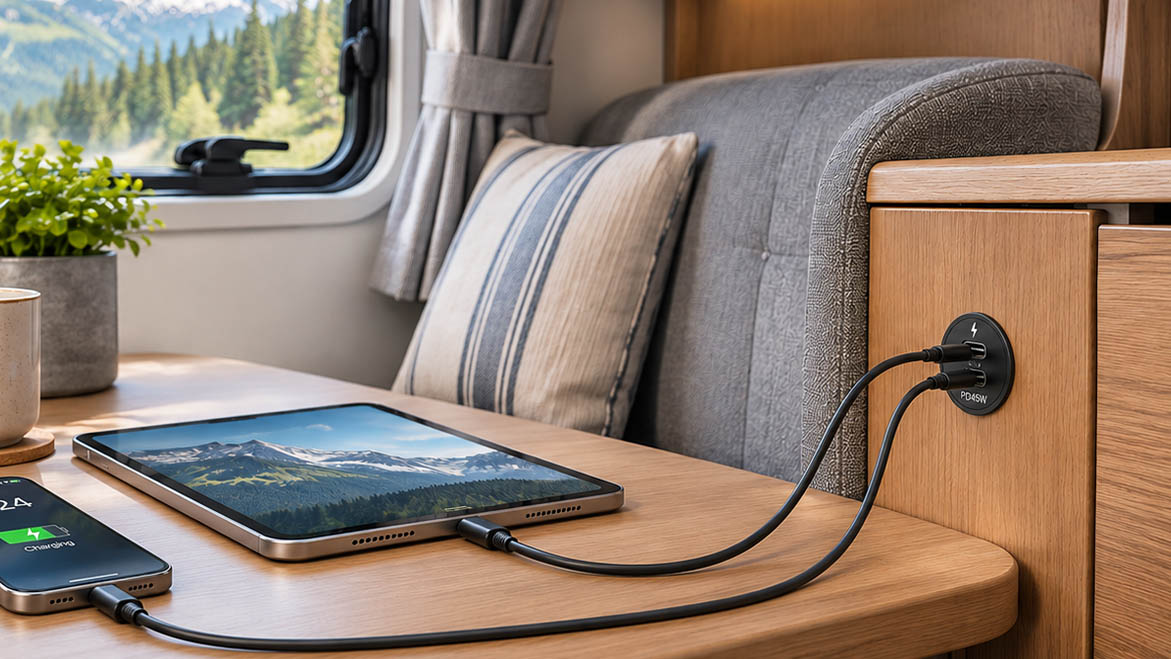
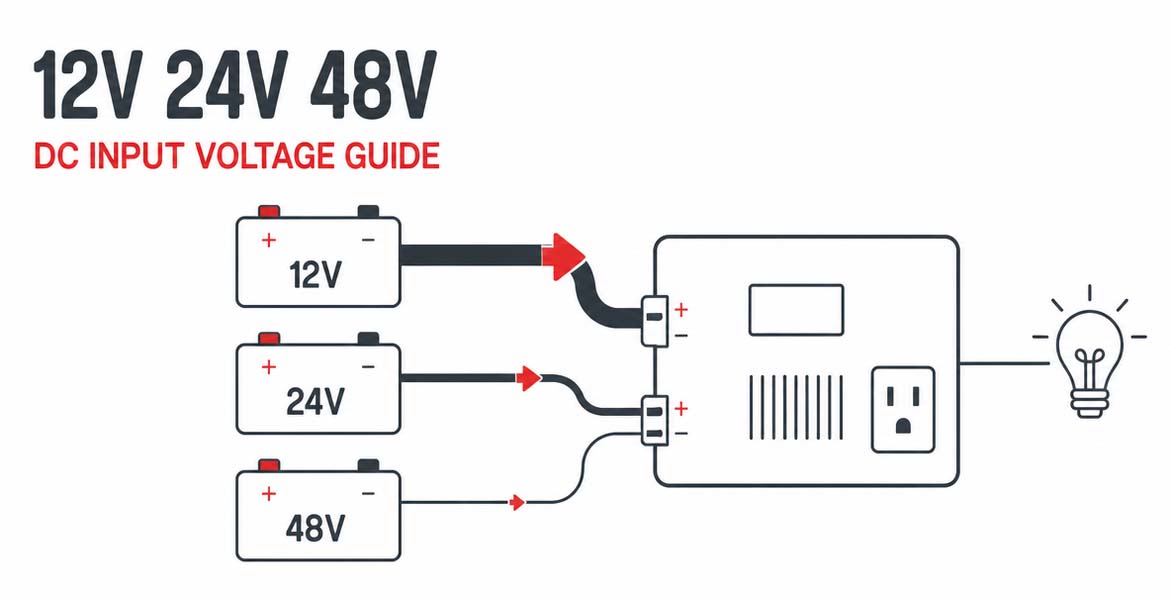
Most vehicle USB charger projects land in one of five configurations: 12V input, 24V input, USB-A only, USB-C PD, or a multi-port mix. Input range is the first thing to pin down, because a 12V-only charger on a 24V machine is a warranty event waiting for a delivery date. A 9-36V input covers both systems and survives the cranking dips between.
Output power then follows the device, not the marketing. For USB-C PD at 45W or 65W, conversion efficiency and temperature rise matter as much as the wattage on the label, since a 65W port that throttles to 30W after ten minutes is a 30W port with better paperwork. Our vehicle USB charger range covers the common combinations across both input voltages.
5.2 Mounting, housing and customization
The last set of decisions is mechanical: panel thickness, connector orientation, whether the port needs to be flush or surface mounted, sealing requirements, and how the harness exits.
These are also the decisions that most often force a custom run. A dashboard retrofit and an OEM production line rarely want the same housing, and a supplier who can only sell a catalogue item will cost you a bracket and six months. The automotive USB charging port line exists for that reason: flame-retardant housing, panel mount, harness length to drawing.
6. FAQ
Q1: Is AEC-Q100 a certification?
A1: No. AEC-Q100 §1.3.2 states that no certifications exist and no certification board issues them. Suppliers qualify their own parts and submit data to the customer.
Q2: Can a finished USB charger be AEC-Q100 qualified?
A2: Not in the sense the standard defines, and a qualified control IC does not make the charger "automotive-grade" either. That phrase is a market description with no single legal definition. What is verifiable: the IC grade, the module test reports, and the certifications.
Q3: Which grade should a dashboard-mounted charger use?
A3: Most cabin electronics are specified at Grade 2 or Grade 3. The honest answer is that it should follow the measured ambient at the mounting location, plus margin for a closed panel. Do not pick a grade because a competitor printed it.
Q4: How does IATF 16949 relate to AEC-Q100?
A4: They answer different questions. IATF 16949 certifies a quality management system. AEC-Q100 qualifies a component through stress testing. A factory can hold one and have nothing to show for the other.
Q5: Do all vehicle USB chargers use AEC-Q100 qualified ICs?
A5: No, and a supplier who says yes on every line deserves a second question. Standard builds select ICs against the application and the target cost. Where a project specifies automotive-grade silicon, we support adopting AEC-Q100 qualified ICs and supply the matching qualification data.
Q6: Can you provide PPAP and test reports?
A6: For the quoted configuration, yes: IC supplier qualification summaries and PPAP where available for automotive-grade parts; PCBA test reports including AI-assisted AOI records; module-level electrical, thermal, EMC, ESD and protection reports as applicable; and certification documents. Our in-house laboratory can also run project-specific tests where the standard set does not cover your application. We do not qualify ICs or issue AEC-Q100 certificates; AEC-Q100 qualification remains with the IC manufacturer.
7. Next Step
The useful question is not whether a charger is AEC-Q100 qualified. It is which ICs carry which AEC-Q100 grade, what was validated at module level, and which documents will arrive with the first shipment. DAMAVO does not qualify ICs or issue AEC-Q100 certificates; we source qualified ICs where specified and validate the PCBA and module.
Send us the input voltage, the output configuration, the mounting position and the certifications your market requires. If the project needs automotive-grade silicon, say so at RFQ stage. We will quote either the commercial-grade configuration or the AEC-Q100 qualified IC configuration, and state clearly which ICs, grade, module-level validation and documents are included.
How to Choose a 12V/24V USB Charger with USB-C PD
Related Article