Pure Sine Wave vs Modified Sine Wave Inverter Which One Should You Choose?
When you choose a power inverter, you may first look at power rating, voltage, and price. But from our experience, output waveform is just as important. A pure sine wave inverter and a modified sine wave inverter can both convert DC power into AC power, but they are not suitable for exactly the same loads.
Quick Answer
If your system powers simple loads and cost is the main concern, a modified sine wave inverter may be enough. If you need to run motors, compressors, chargers, sensitive electronics, or several AC loads at the same time, a pure sine wave inverter is usually the safer choice.
Key takeaways:
- Pure sine wave output is closer to the AC power from the electrical grid.
- Modified sine wave inverters can work well with some simple loads.
- Motors, compressors, chargers, and sensitive electronics usually enjoy pure sine wave power.
- Pure sine wave is often a better fit for RVs, vehicles, marine systems, and mixed AC loads.
- The best inverter should be selected based on your actual loads, power needs, and operating conditions.
What Is the Difference Between Pure Sine Wave and Modified Sine Wave?
To understand which inverter is right for you, it helps to start with the basic difference. Both types convert DC power from a battery or other DC source into AC power. The main difference is the shape of the AC output.

That difference may not matter for every device, but it can affect how some equipment starts, runs, charges, or handles long periods of use.
Pure Sine Wave Inverter
A pure sine wave inverter produces a smooth and continuous AC waveform. Its output is much closer to the AC power normally supplied by the electrical grid.
Because of this, pure sine wave power is generally compatible with a wider range of equipment. It is especially useful for systems that include motors, compressors, chargers, control electronics, and other devices that may be sensitive to power quality.
Modified Sine Wave Inverter
A modified sine wave inverter uses a stepped waveform to create AC power. The design can be simpler, which often makes this type of inverter less expensive.
For some basic loads, this can be a practical choice. For example, certain heaters and simple lighting products may work normally with modified sine wave power.
However, not every electronic device is designed to work well with this type of output. That is why we recommend looking at the actual load before choosing an inverter.
Which Inverter Is Better for Different Loads?
This is one of the most important questions to ask. In our view, the right inverter should not be chosen only by looking at the product name or price. You should first understand what kind of electrical loads you need to power.
Resistive Loads
Resistive loads include many heaters, heating elements, and some basic lighting products. These loads are usually less sensitive to the shape of the AC waveform.
For this type of application, a modified sine wave inverter may be able to provide enough power for normal operation.
Motors and Compressors
Motors and compressors are more demanding. They may need a higher starting current and can be more sensitive to the quality of the AC power.
Common examples include:
- Fans
- Water pumps
- Refrigerators
- Air compressors
- Some power tools
If you need to run these loads regularly, we generally recommend considering a pure sine wave inverter. A cleaner waveform can help equipment run more smoothly and may reduce unwanted noise or extra heat.
Electronics and Chargers
Modern systems often include laptops, TVs, battery chargers, LED drivers, and control electronics. Some of these devices are more sensitive to the quality of the incoming AC power.

If your system includes several electronic devices, pure sine wave is usually the safer option. It also gives you more flexibility if you add new equipment later.
Which Inverter Is Better for RVs and Vehicles?
RV and vehicle power systems often have more complex power needs than a single appliance. You may need to power a refrigerator, lights, TV, fan, charger, and other AC equipment from the same inverter.

This means you should think about the whole power system, not just one device.
From our experience at DAMAVO®, pure sine wave is often a better choice for RV and vehicle applications when several AC loads may operate at the same time. It provides a stable AC power source and gives you broader compatibility with different types of equipment.
For an RV power system, the inverter should also be selected together with the battery voltage, continuous power, surge power, and other system requirements.
Is a Pure Sine Wave Inverter Worth the Higher Cost?
Price is important, but it should not be the only factor in your decision.
A modified sine wave inverter may have a lower initial cost. If you only need to power simple loads and use the inverter occasionally, this can make sense.
But if your system runs regularly or includes motors, compressors, chargers, and sensitive electronics, you should also consider compatibility and long-term reliability.
We suggest asking a different question:
“Which inverter gives me the better system value?”
A lower buy price does not always mean a lower total system cost. If an inverter has limited compatibility with your equipment, you may face performance problems or need to replace equipment later.
For systems that need stable AC power over long periods, the more cost of a pure sine wave inverter may be easier to justify.
When Should You Choose a Modified Sine Wave Inverter?
A modified sine wave inverter can still be a practical solution for the right application. We do not recommend choosing one simply because it is cheaper, but there are situations where it may be enough.

You may consider a modified sine wave inverter when:
- Your loads are simple and not sensitive to waveform quality.
- Most of your loads are resistive.
- The inverter is used only occasionally.
- Sensitive electronics are not part of the system.
- Initial cost is a major concern.
Before making a final decision, always check the equipment manufacturer's requirements. Some devices may work normally, while others may not perform as expected.
When Should You Choose a Pure Sine Wave Inverter?
If your system includes several types of AC loads, pure sine wave is usually the more flexible choice.

We recommend looking closely at pure sine wave power when your application includes:
- Motors
- Compressors
- Refrigerators
- Pumps
- Battery chargers
- Sensitive electronics
- LED drivers
- Control systems
- Many AC loads
- Long operating hours
At DAMAVO®, we focus on power and lighting solutions designed for real-world applications. For RVs, vehicles, marine systems, and equipment that need stable AC power, our pure sine wave inverter solutions can provide a strong foundation for the power system.
How Do You Choose the Right Inverter?
Choosing the waveform is only the first step. You also need to make sure the inverter matches your actual power system.
1. Check the Load Type
First, list the equipment you want to power. Does the system include motors, compressors, chargers, or sensitive electronics?
2. Calculate Continuous Power
Add the power ratings of the devices that may run at the same time. Your inverter's continuous power rating should be high enough for the expected load.
3. Check Starting or Surge Power
Some motors and compressors need much more power when they start than when they are running. Make sure the inverter can handle this short-term surge.
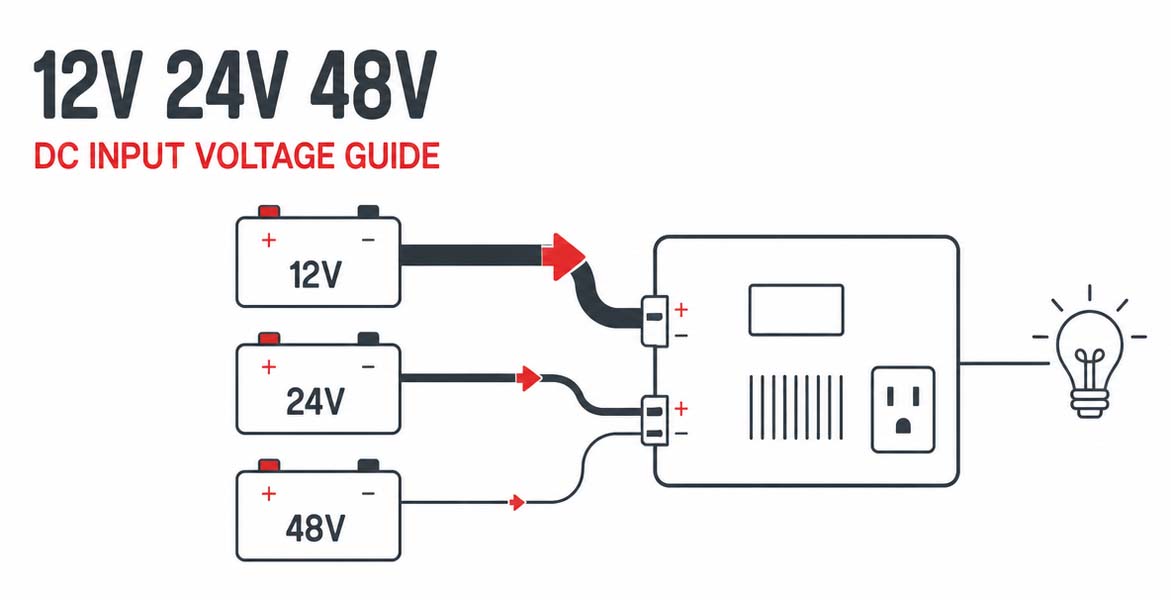
4. Check the DC Input Voltage
Your battery or DC power system may use 12V, 24V, or 48V. The inverter input voltage must match your system.
5. Check the AC Output
You should also confirm the required output voltage and frequency. For example, your equipment may must 120V or 220V AC, depending on the application and market.
Taking these steps can help you avoid choosing an inverter based only on its wattage or price.
If your application has specific voltage, power, installation, or functional requirements, you can also consider custom power inverter solutions designed around your system needs.
Pure Sine Wave vs Modified Sine Wave: Quick Decision Guide
If you are still comparing the two options, this simple guide can help:
| Application | Recommended Choice |
| Simple heater | Modified sine wave may work |
| Basic lighting | Either, depending on the load |
| Laptop or charger | Pure sine wave preferred |
| Refrigerator | Pure sine wave recommended |
| Pump or fan | Pure sine wave preferred |
| RV with mixed loads | Pure sine wave recommended |
| Vehicle equipment | Pure sine wave preferred |
| Sensitive electronics | Pure sine wave recommended |
| Long-term system use | Pure sine wave recommended |
The key point is simple: choose the waveform based on the load, not just the inverter price.
Frequently Asked Questions

Q1: Is a pure sine wave inverter better than a modified sine wave inverter?
A1: Not for every application. A modified sine wave inverter may be enough for simple loads. However, pure sine wave usually offers broader compatibility and is a better choice for motors, compressors, chargers, sensitive electronics, and mixed AC loads.
Q2: Can a modified sine wave inverter run a refrigerator?
A2: It may work with some refrigerators, but compatibility depends on the refrigerator and inverter design. Because refrigerators use compressors and have starting power requirements, pure sine wave is generally the safer choice for regular use.
Q3: Do RVs need a pure sine wave inverter?
A3: Not every RV requires one. However, if your RV has a refrigerator, chargers, electronics, motors, or several AC loads, a pure sine wave inverter can provide better compatibility and more stable power.
Q4: What devices should not use modified sine wave power?
A4: There is no single list that applies to every product. Sensitive electronics, some chargers, motors, compressors, and certain control systems may not work well with modified sine wave output. Always check the equipment manufacturer's requirements.
Q5: Does pure sine wave improve inverter efficiency?
A5: The main advantage of pure sine wave is not simply higher efficiency. Its smoother output provides better compatibility with a wide range of loads. Actual system efficiency depends on the inverter design, load, operating conditions, and other system factors.
Q6: How do I choose the right inverter for my equipment?
A6: Start with the load type, total continuous power, starting power, DC battery voltage, AC output voltage, and frequency. If your system includes mixed or sensitive loads, pure sine wave is usually the more flexible option.
Q7: Final Verdict: Which Inverter Should You Choose?
A7: If you only need to power simple loads and keeping the initial cost low is your main goal, a modified sine wave inverter may be suitable.
But if your system includes motors, compressors, chargers, sensitive electronics, or many AC loads, a pure sine wave inverter is usually the safer and more reliable choice.
At DAMAVO®, we believe inverter selection should start with the real application, not just a product specification sheet. For RV, vehicle, marine, and equipment power systems, choosing the right pure sine wave inverter can help create a more stable and reliable AC power system.
The best inverter is not simply the one with the lowest price. It is the one that matches your loads today and gives your system enough flexibility for tomorrow.
Pure Sine Wave Inverters: How to Choose the Right Inverter for RVs, Vehicles and Equipment
OEM Off Grid Solar Power System Solutions: Reliable Energy for RV, Marine, and Industrial Applications
Related Article