What Can a Modified Sine Wave Power Inverter Run? A Load Matching Guide
A modified sine wave power inverter can run many common devices, but the answer is not based only on the device name. At DAMAVO®, we usually look at the load type, continuous power, startup power, and waveform requirements before deciding if an inverter is a good match.
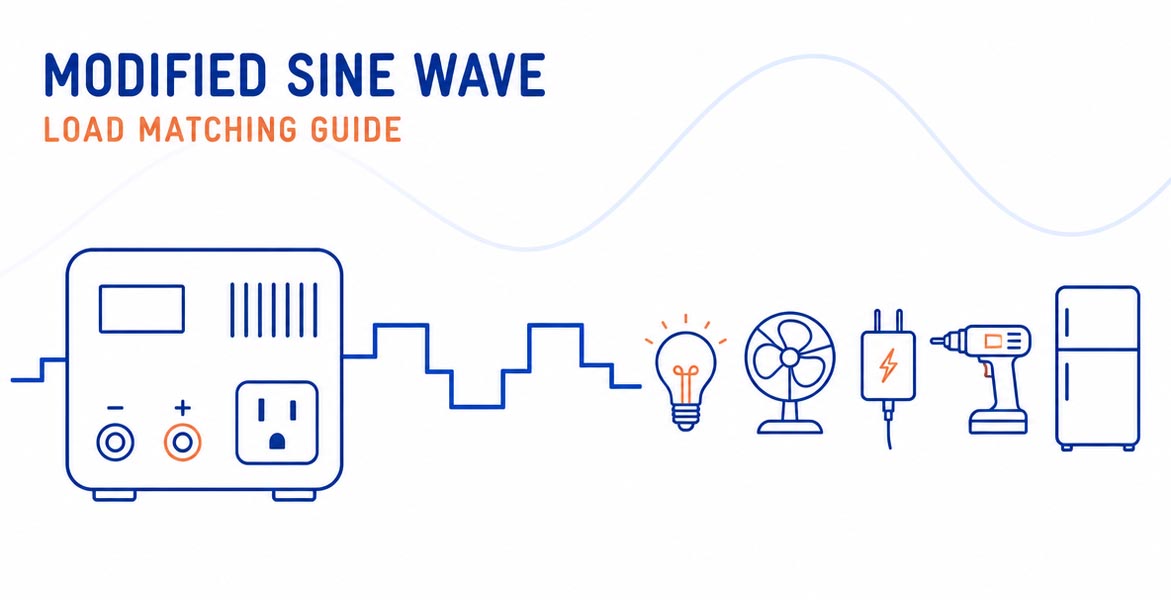
If you are choosing an inverter for a vehicle, battery system, mobile equipment, or other power application, these factors are more important than only checking the rated wattage.
Key Takeaways:
- Simple resistive loads are usually easier to run with a modified sine wave inverter.
- Electronic devices may need a compatibility check.
- Motors, pumps, and compressors need extra attention because of startup surge.
- Sensitive equipment is usually better matched with pure sine wave power.
- Always check load type, running watts, surge power, and DC input voltage.
What Can a Modified Sine Wave Inverter Run? Quick Answer
If you only want a quick answer, the table below can help you make a first check. However, two devices in the same category may use different internal circuits, so this should be used as a guide instead of a fixed yes-or-no list.
| Device Type | Compatibility | Main Point to Check |
| Heating element | Usually suitable | Continuous power |
| Incandescent light | Usually suitable | Continuous power |
| Phone or tool charger | Check first | Power supply design |
| Power drill | Depends | Motor type and startup power |
| Fan or pump | Check first | Motor type and surge power |
| Refrigerator or compressor | Use caution | Startup surge and heat |
| Precision electronics | Pure sine wave preferred | Power quality |
| Medical or critical equipment | Follow manufacturer rules | Safety and power requirements |
Why Load Type Matters More Than the Device Name
When we check whether a device can run on a modified sine wave inverter, we do not only ask whether it is a light, charger, tool, or refrigerator. The more important question is how the device uses power inside.
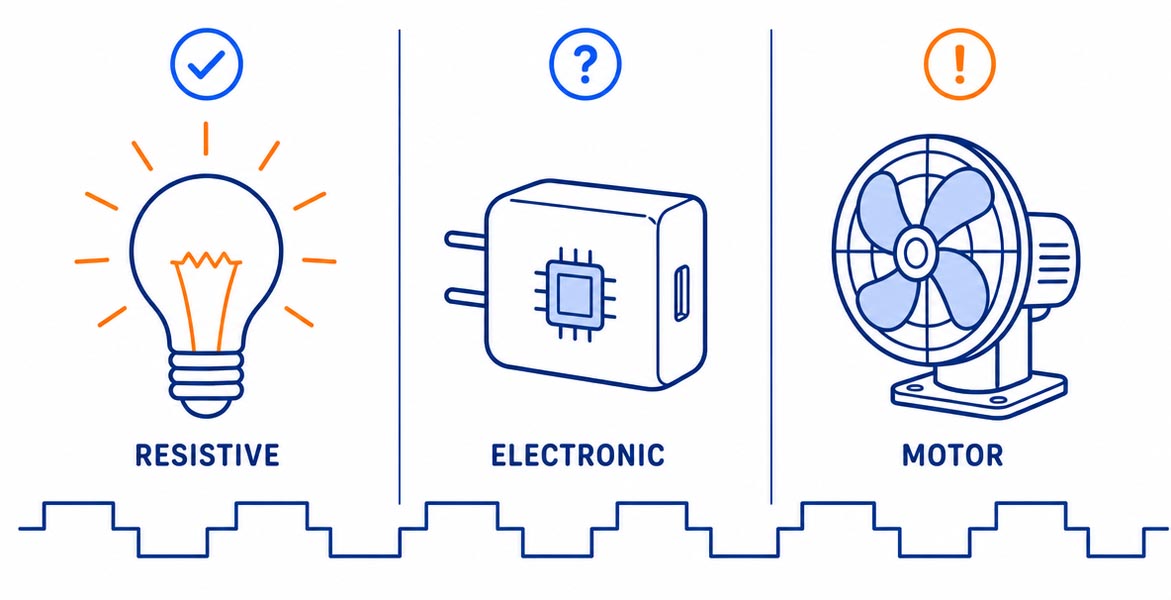
Resistive Loads
Resistive loads are usually the easiest type to match with a modified sine wave inverter.
Examples include simple heating elements and traditional incandescent lights. These devices usually do not depend heavily on the exact AC waveform.
If the continuous power stays within the inverter's rated output, these loads are often a good match.
If most of your system uses simple resistive loads, a modified sine wave inverter can offer a practical balance between basic performance and cost.
Electronic Loads
Phone chargers, tool battery chargers, AC adapters, and many modern devices use electronic power supplies.
Some of these products can work normally with modified sine wave power, but not all electronic power supplies are designed the same way.
If you notice unusual heat, buzzing, noise, or unstable operation, stop using the device and check the manufacturer's power requirements.
Motor and Inductive Loads
Fans, pumps, power tools, refrigerators, and compressors often use motors.
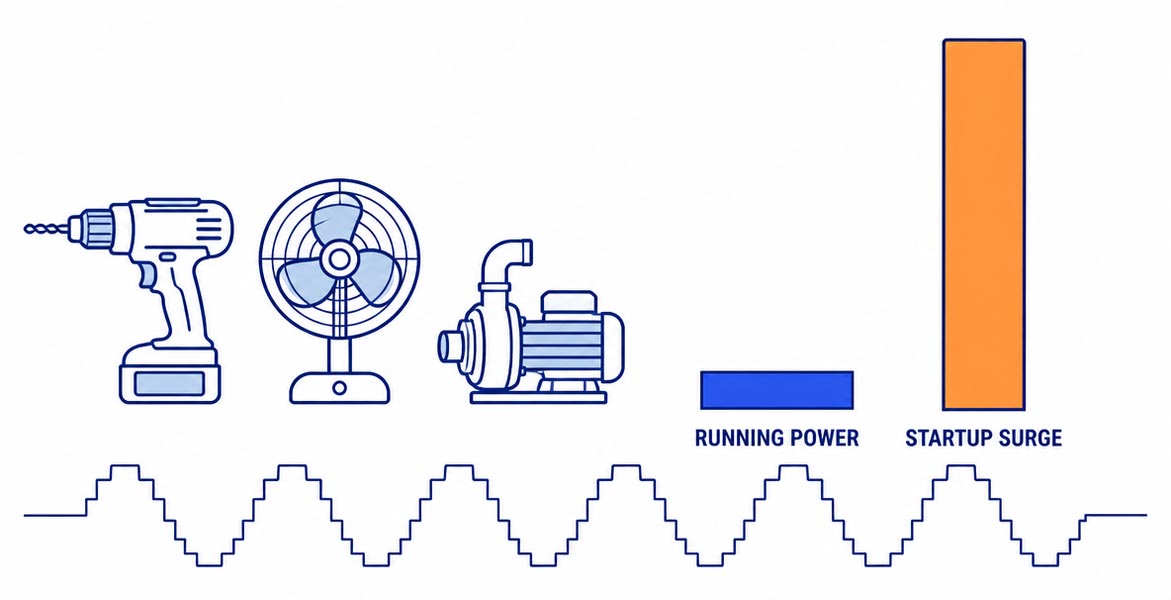
These loads can be more difficult because they may need much more power when they start than when they run normally.
For this reason, you should not choose an inverter only by looking at the normal wattage on the label. You also need to check:
- motor type
- startup surge
- electronic speed control
- waveform requirements
Which Devices Are Usually Better Suited to Modified Sine Wave Power?
Modified sine wave inverters are often a practical choice for simple devices that are not very sensitive to waveform quality. Even so, we recommend checking the rated power and manufacturer instructions before making a final decision.
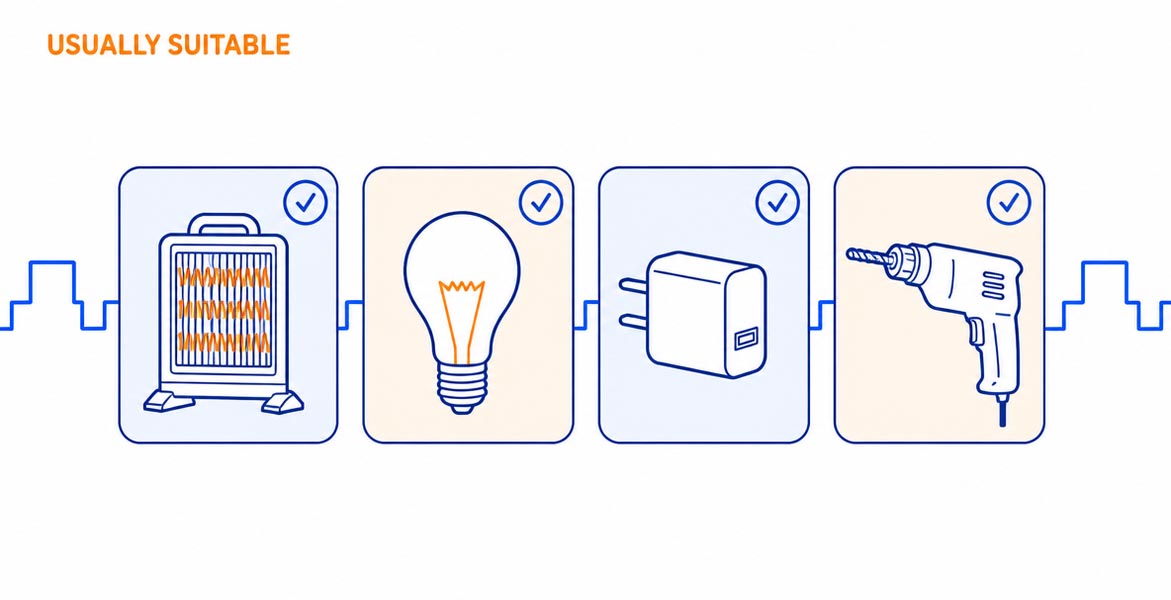
Simple Heating Equipment
Basic heating elements mainly turn electrical energy into heat.
Because they are simple resistive loads, they are usually less sensitive to waveform shape. As long as the running power is within the inverter's rated output, they are often a suitable load.
Basic Lighting
Traditional incandescent lights are also simple resistive loads and can usually run on modified sine wave power.
However, this does not mean every lighting product is the same.
Modern LED lights may use electronic drivers or control circuits. If the light includes a more complex power supply, it should be treated as an electronic load instead.
Some Chargers and Power Adapters
Some phone chargers, battery chargers, and AC adapters can work on a modified sine wave inverter.
The main factor is the internal power supply design.
If the device manufacturer clearly says that pure sine wave power is required, you should follow that need.
Some Power Tools
Some basic drills and power tools may work with modified sine wave power.
However, tools with electronic speed control, digital controls, or more complex motor systems need a closer compatibility check.
Startup power is also important. A tool may only use a certain wattage while running, but it may need much more power for a short time when starting.
Which Devices Need More Caution?
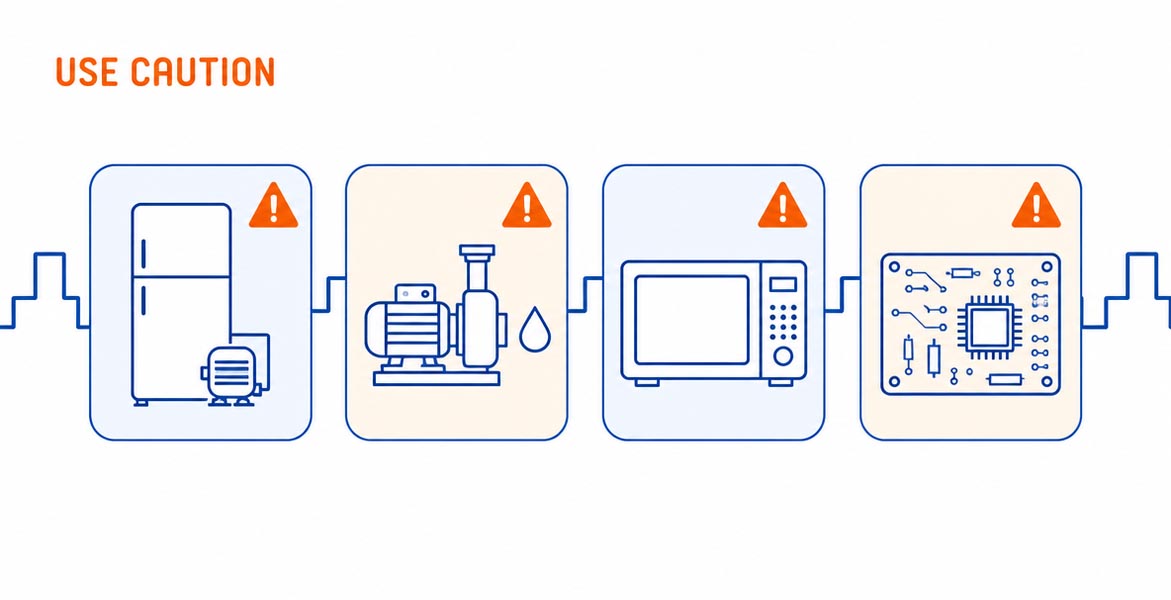
Some devices may look simple from the outside, but they contain motors, compressors, or sensitive electronic controls. In these cases, the biggest issue may not be normal running power. The real challenge can be startup surge or waveform sensitivity.
Refrigerators, Compressors, and Pumps
Refrigerators, compressors, and pumps usually have higher startup power than normal running power.
For example, a refrigerator may use a moderate amount of power during normal operation, but its compressor can must a much higher surge when it starts.
If the inverter does not have enough peak output, the equipment may:
- fail to start
- restart again and again
- trigger inverter protection
- operate less efficiently
For these loads, we recommend checking both continuous power and startup surge power.
Microwaves
Microwaves can be more difficult to match because they may contain both high-power components and electronic controls.
Modified sine wave power may affect heating performance, efficiency, or control circuits in some models.
Do not choose an inverter for a microwave only by looking at the wattage. Check the manufacturer's power requirements as well.
Sensitive Electronics
Audio equipment, computers, precision control systems, and other sensitive electronics may react more strongly to waveform quality.
In some cases, modified sine wave power may cause:
- extra heat
- buzzing noise
- electrical interference
- unstable operation
If your equipment is expensive, sensitive, or important to the system, pure sine wave power is usually the safer choice.
Modified Sine Wave Inverter Load Compatibility Table
If you need to compare several devices, the table below gives a clearer starting point. At DAMAVO®, we recommend using this as a first screening step, then checking the exact device specifications before choosing an inverter.
| Device | Load Type | Modified Sine Wave Recommendation | Main Concern |
| Heating element | Resistive | Good candidate | Continuous power |
| Incandescent light | Resistive | Good candidate | Continuous power |
| Phone charger | Electronic | Check compatibility | Adapter design |
| Laptop adapter | Electronic | Check compatibility | Heat, noise, manufacturer rules |
| Power drill | Motor | Depends | Startup power |
| Fan | Motor | Check compatibility | Motor type |
| Pump | Motor / inductive | Check compatibility | Startup surge |
| Refrigerator | Compressor | Use caution | Surge and heat |
| Microwave | Electronic / high power | Use caution | Efficiency and controls |
| Precision control equipment | Sensitive electronic | Pure sine wave preferred | Power quality |
How Much Inverter Power Does Your Load Need?
After you confirm that the waveform is suitable, the next step is power sizing.
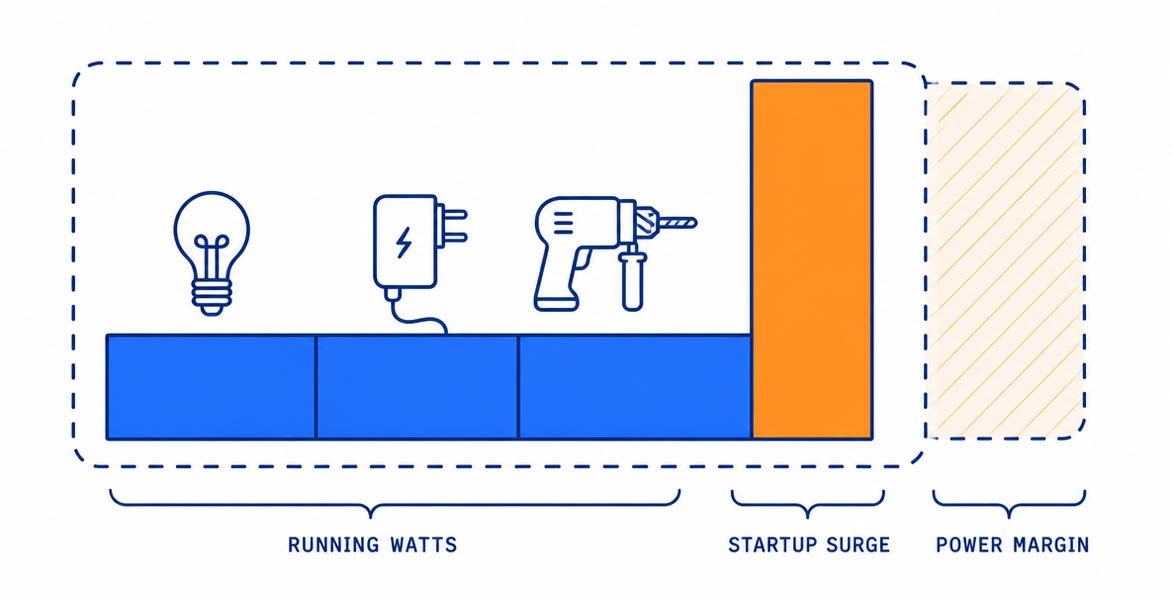
A device may be compatible with modified sine wave power, but the system can still fail if the inverter does not have enough continuous or peak output.
Check the Continuous Running Power
Start by checking the rated power on the equipment label.
If several devices will run at the same time, add their power together.
For example, if you use lighting, a charger, and a power tool at the same time, the inverter must support the total load, not only the largest single device.
Check Startup or Surge Power
For motors, pumps, compressors, and some power tools, the normal running wattage is not enough information.
These devices may need much higher power during startup.
At DAMAVO®, this is one of the points we pay close attention to during inverter matching. Many selection problems happen because the running wattage looks acceptable, but the startup surge was not considered.
If your system needs a higher continuous output, you can also compare DAMAVO® power inverter options by output requirement.
Leave Reasonable Power Margin
We normally do not recommend choosing an inverter that will run close to its greatest rated output for long periods.
Real systems are affected by:
- operating time
- ambient temperature
- number of connected devices
- short power changes
- startup loads
Leaving a reasonable power margin can help the system operate more reliably.
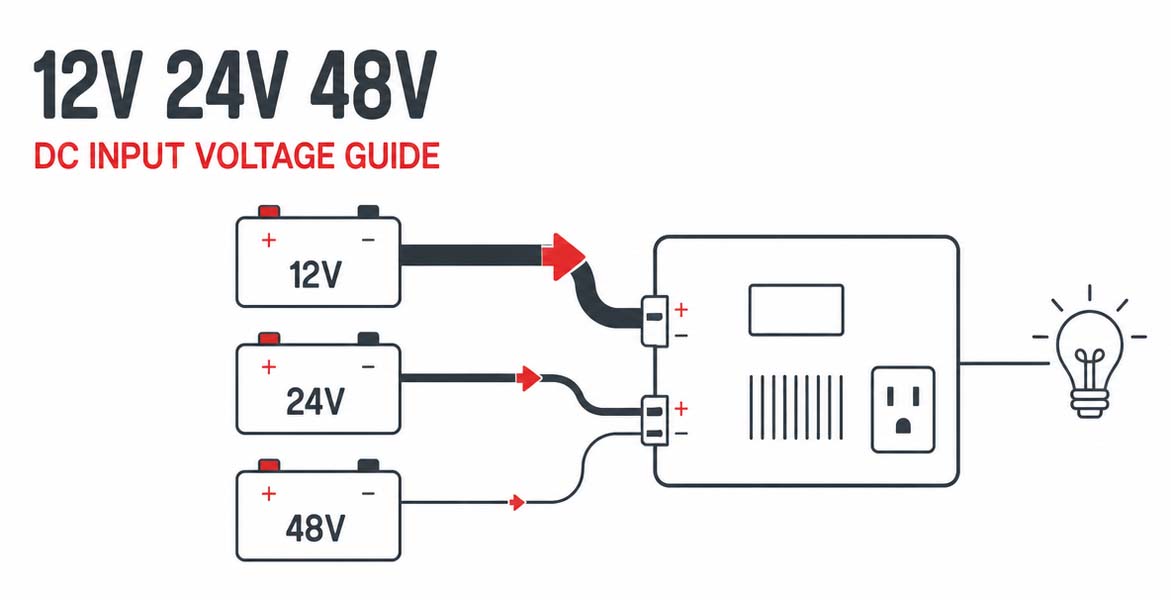
Does 12V or 24V Affect Device Compatibility?
12V and 24V mainly describe the DC input side of the inverter.
They do not directly decide whether an AC device can work with modified sine wave power. However, the inverter input voltage must match your battery, vehicle, or electrical system.
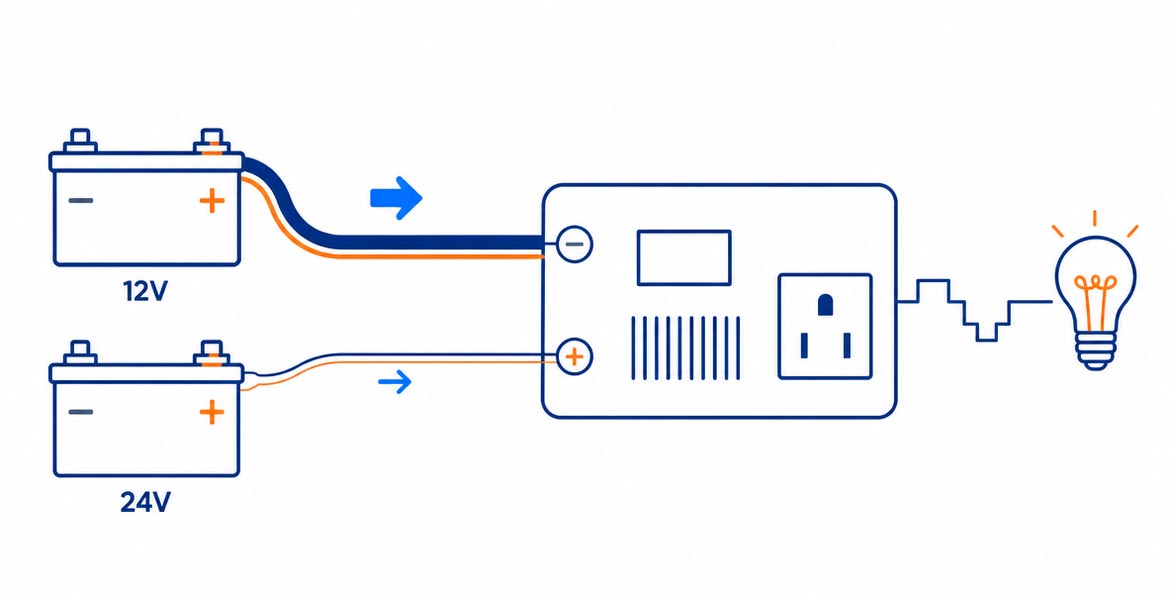
For equipment already built around a 24V battery system, a matching 24V Power Inverter Modified Sine Wave can keep the electrical layout simpler.
In real applications, we also look at input current, cable size, installation space, and system layout. The voltage number is only one part of the complete design.
Modified Sine Wave or Pure Sine Wave: Which Should You Choose?
If your loads are mainly simple resistive devices, basic lighting, or less sensitive equipment, a modified sine wave inverter can be a practical option.
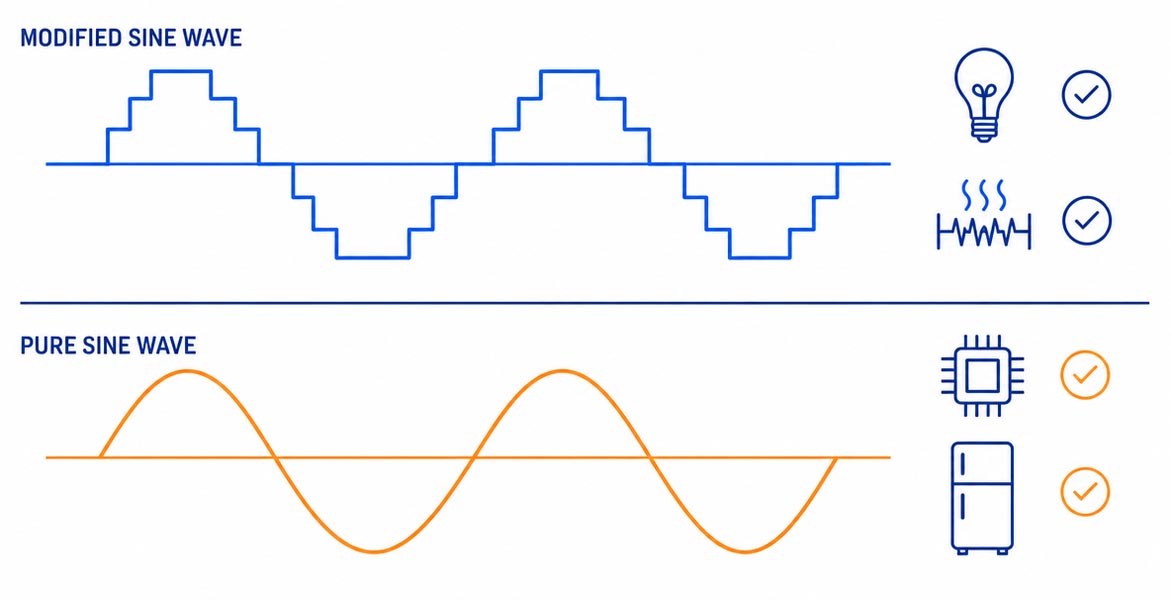
If your system includes compressors, complex motors, electronic speed controls, precision electronics, or equipment that clearly requires clean sine wave power, pure sine wave is usually the better choice.
At DAMAVO®, we prefer to look at the actual load characteristics first instead of assuming that an inverter is suitable just because the wattage is high enough.
| Selection Need | Modified Sine Wave | Pure Sine Wave |
| Simple resistive loads | Suitable | Suitable |
| Cost-sensitive basic power system | Strong option | Possible |
| General electronic devices | Check first | Wider compatibility |
| Motors and compressors | Check first | Usually better |
| Precision electronics | Not first choice | Preferred |
| Maximum device compatibility | Limited | Better choice |
5 Steps to Check If Your Device Is a Good Match
If you are not sure which inverter to choose, these five steps can help you make a basic decision before selecting a product.
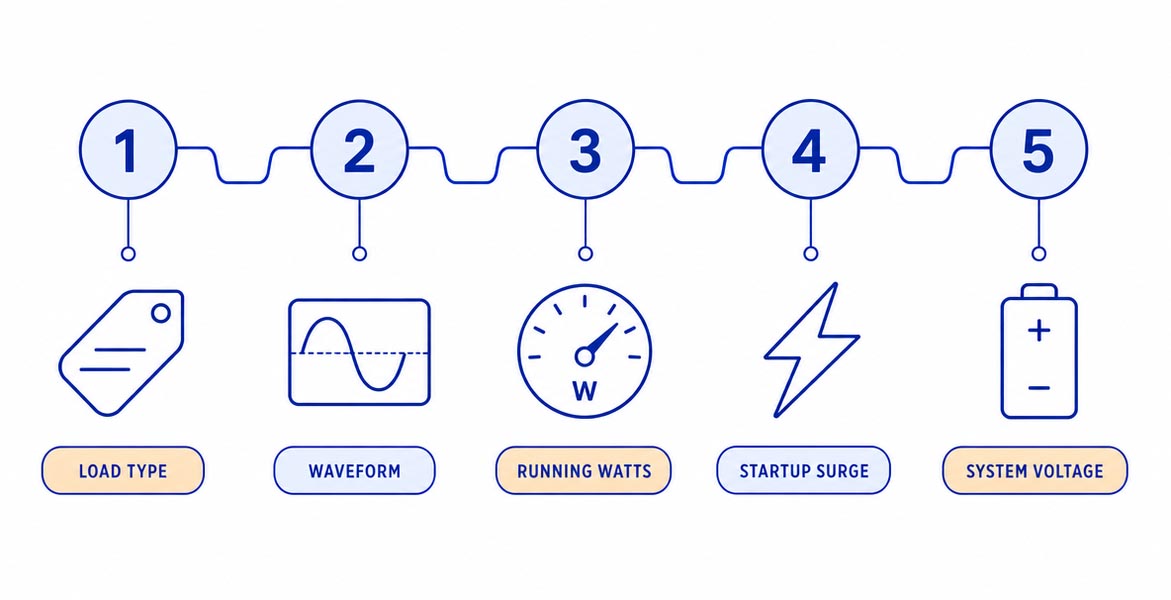
- Identify the load type: resistive, electronic, or motor-driven.
- Check whether the equipment requires pure sine wave power.
- Confirm the continuous running wattage.
- If the device has a motor, pump, or compressor, check startup surge power.
- Match the inverter DC input voltage with your 12V or 24V power system.
If you can answer these five points, choosing the right inverter usually becomes much easier.
How Does DAMAVO® Approach Load Matching?
At DAMAVO®, we do not believe that one fixed list can tell you whether every device will or will not work with a modified sine wave inverter.
Two products with the same name may use different motors, power supplies, or electronic controls.
That is why we focus on the actual operating conditions:
- load type
- waveform need
- continuous power
- startup surge
- DC system voltage
If you already know your equipment's rated power, input voltage, load type, and application, these details can help us understand which inverter type and power range may be a better match.
Frequently Asked Questions

In real inverter selection, people often ask about refrigerators, tools, power sizing, and custom system requirements. The answers below can help you make a better first decision and also explain how DAMAVO® can support your project.
Q1: Can a modified sine wave inverter run a refrigerator?
A1: Some refrigerators may run on modified sine wave power, but the compressor can must high startup power.
Different refrigerator models also react differently to waveform quality.
For long-term use, or when the refrigerator manufacturer has strict power requirements, pure sine wave is usually the safer choice.
Q2: Can a modified sine wave inverter run power tools?
A2: Some simple power tools may work with a modified sine wave inverter.
You still need to check the motor type and startup power.
If the tool uses electronic speed control, digital controls, or a complex motor system, we recommend checking waveform compatibility before use.
Q3: How do I know if my device should use a pure sine wave inverter?
A3: Start by checking the equipment manual or manufacturer's power requirements.
If the manufacturer clearly asks for pure sine wave power, use a pure sine wave inverter.
You should also strongly consider pure sine wave for equipment with compressors, precision controls, electronic speed systems, or sensitive electronics.
Q4: What size inverter do I need?
A4: First, add the continuous wattage of all devices that may run at the same time.
Then check whether any of those devices have motors, pumps, compressors, or other loads with high startup power.
The inverter should support both the normal operating load and the required startup surge.
We also recommend leaving a reasonable power margin instead of choosing an inverter that will operate close to its rated limit all the time.
Q5: Can DAMAVO® help check whether my equipment matches an inverter?
A5: Yes. If you are not sure whether you need a modified sine wave or pure sine wave inverter, you can provide information such as:
- rated power
- input voltage
- load type
- startup power
- application
DAMAVO® can use this information to help with basic load matching and suggest a more suitable inverter type, input voltage, and power range.
Q6: Does DAMAVO® offer 12V, 24V, and different power inverter options?
A6: Yes. DAMAVO® offers inverter solutions for different vehicle, battery, and equipment systems. The right choice depends on your DC input voltage, AC output requirements, continuous power, peak power, installation conditions, and actual load. For a specific project, we recommend matching the inverter to the full system instead of choosing only by wattage.
Q7: Does DAMAVO® support OEM and ODM inverter customization?
Q7: Yes. DAMAVO® supports OEM and ODM inverter projects for vehicle equipment, mobile power systems, and other integrated power applications.
Depending on the project, we can discuss requirements such as:
- power level
- input voltage
- output requirements
- interfaces
- product structure
- installation needs
- other custom specifications
If you already have a device specification or project need, sharing those details can make the evaluation process faster and more accurate.
Whether a modified sine wave inverter is suitable for your device depends less on the device name and more on how the device actually uses power.
Simple resistive loads and some basic electronic devices may work well with modified sine wave power. Motors, compressors, complex electronic controls, and sensitive equipment need a closer check.
Before choosing an inverter, ask five questions:
What type of load is it? What waveform does it need? What is the continuous power? What is the startup power? Is the system 12V or 24V?
Once these points are clear, it becomes much easier to choose a reliable inverter for your application.
12V vs 24V vs 48V Power Inverter: How to Choose the Right DC Input Voltage
When Should You Choose a Modified Sine Wave Inverter? Cost, Loads and Applications
Related Article